
Meghadūta: When Love Learns to Wait
A lover asks a cloud to carry his message. Then he asks it to wait.
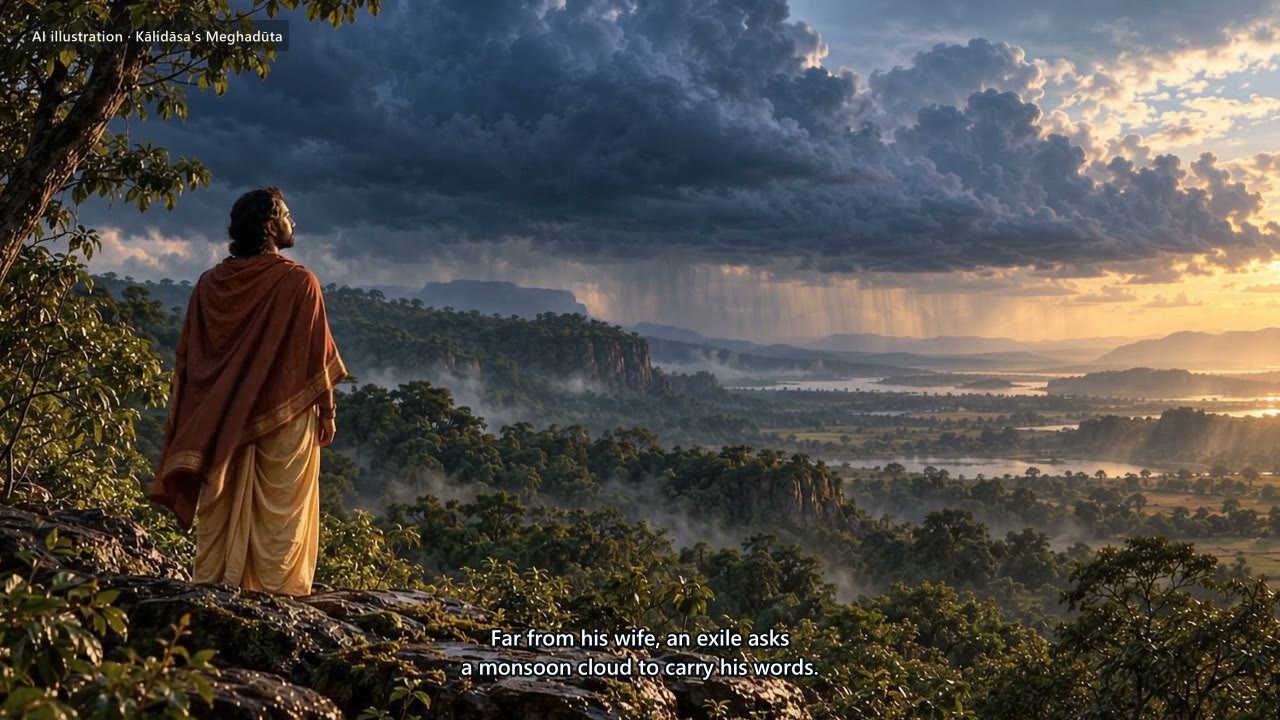
An exiled yaksha watches a monsoon cloud and imagines it travelling to the wife he cannot reach. Across rivers, hills and cities, longing becomes a landscape.
This is Kālidāsa’s Meghadūta, the Cloud Messenger.
Then, amid his careful directions, comes a gentler instruction:
If she is asleep, wait.
तस्मिन् काले जलद यदि सा लब्धनिद्रासुखा स्याद्
अन्वास्यैनां स्तनितविमुखो याममात्रं सहस्व ।
मा भूदस्याः प्रणयिनि मयि स्वप्नलब्धे कथंचित्
सद्यःकण्ठच्युतभुजलताग्रन्थि गाढोपगूढम् ॥
Read the Sanskrit in Roman letters
tasmin kāle jalada yadi sā labdhanidrāsukhā syād
anvāsyaināṃ stanitavimukho yāmamātraṃ sahasva |
mā bhūd asyāḥ praṇayini mayi svapnalabdhe kathaṃcit
sadyaḥ kaṇṭhacyutabhujalatāgranthi gāḍhopagūḍham ||
Cloud, if she has found the comfort of sleep, stay beside her for a watch, withholding your thunder. If she has found me, her beloved, in a dream, let that close embrace not suddenly lose the knot of her arms around my neck.
Bharatiyata’s prose rendering of Uttaramegha 2.37.
He longs to be heard. Yet he asks the messenger to protect the possibility of her dream.
That is the tenderness of this moment: love making room for another person’s peace.
The most intimate part of his message is the silence he asks for.
Explore more of India’s literary imagination: poetry, stories, drama and living voices across languages.
Read the sources
- GRETIL: Sanskrit text, based on M. R. Kale’s edition; opening 1.1–1.7 and sleep passage 2.37.
- Sanskrit Documents: Devanagari text, Uttaramegha 2.37.
- Arthur W. Ryder’s English translation (1912), Latter Cloud XXXIV. Verse numbering differs between editions.