
Māṇḍūkya Upaniṣad: The Three States and Turīya
The Mandukya Upanishad sets waking, dream and dreamless sleep side by side, then points to a fourth, turīya. A reading of its twelve passages and mantra 7.
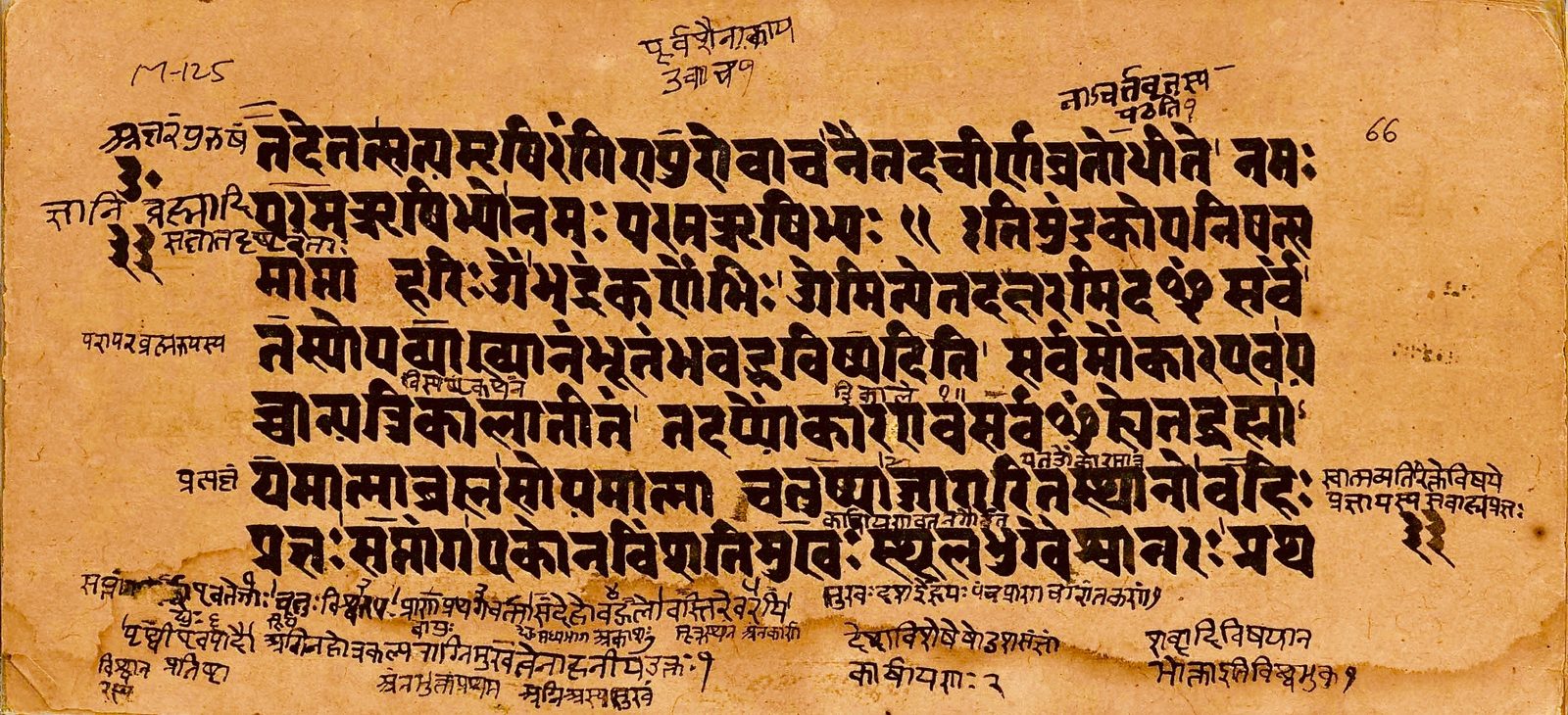
Philosophy of mind & contemplative inquiry · Sanskrit · Māṇḍūkya Upaniṣad
Most of what we say about the mind is said from inside the waking state. Dreaming and deep sleep are usually treated as interruptions.
The Māṇḍūkya Upaniṣad (often spelt Mandukya Upanishad), a short, late prose Upaniṣad of just twelve passages (mantras), takes a different route. It sets all three ordinary states of daily life side by side, and then points to something that is none of them.
Three states of everyday experience
Mantras 3 to 5 describe the three states, each with its own name:
- Waking (jāgarita-sthāna), called Vaiśvānara: consciousness turned outward (bahiḥprajña), enjoying the gross world.
- Dream (svapna-sthāna), called Taijasa: consciousness turned inward (antaḥprajña), enjoying finer, subtler things.
- Deep sleep (suṣupta-sthāna), called Prājña: a state in which one desires nothing and sees no dream, having “become one”, a single mass of perception (ekībhūtaḥ prajñānaghanaḥ), made of bliss.
Later passages (mantras 8 to 11) pair these three with the three sounds of the syllable AUM: a, u and m.
Read together, the list makes a simple observation hard to ignore. Each state feels complete while we are in it, yet each gives way to the next. The text then turns to what is not one of the three.
The fourth is not another state
The seventh passage describes a “fourth” (caturtha). Later tradition, beginning with Gauḍapāda’s verses on this Upaniṣad, calls it turīya (तुरीय), which also means “the fourth”:
नान्तःप्रज्ञं न बहिःप्रज्ञं नोभयतःप्रज्ञं न प्रज्ञानघनं न प्रज्ञं नाप्रज्ञम् ।
अदृष्टमव्यवहार्यमग्राह्यमलक्षणमचिन्त्यमव्यपदेश्यमेकात्मप्रत्ययसारं प्रपञ्चोपशमं शान्तं शिवमद्वैतं चतुर्थं मन्यन्ते स आत्मा स विज्ञेयः ॥
Read the Sanskrit in Roman letters
nāntaḥprajñaṃ na bahiḥprajñaṃ nobhayataḥprajñaṃ na prajñānaghanaṃ na prajñaṃ nāprajñam |
adṛṣṭam avyavahāryam agrāhyam alakṣaṇam acintyam avyapadeśyam ekātmapratyayasāraṃ prapañcopaśamaṃ śāntaṃ śivam advaitaṃ caturthaṃ manyante sa ātmā sa vijñeyaḥ ||
Neither inward-facing cognition, nor outward-facing cognition, nor both together, nor a mass of cognition, neither knowing nor unknowing — unseen, beyond transactional use, ungraspable, without distinguishing mark, unthinkable, unnameable, whose essence is the cognition of the one self, the quieting of phenomenal multiplicity, peaceful, auspicious, non-dual: that they regard as the fourth. That is the Self; that is to be known. (Bharatiyata’s prose rendering of Māṇḍūkya Upaniṣad 7. Some editions read bahiṣprajñaṃ for bahiḥprajñaṃ.)
The passage describes the fourth almost entirely by what it is not. Gauḍapāda’s verses add that it is “all-seeing” and that neither sleep nor dream belongs to it. In that reading, and in the commentary attributed to Śaṅkara, the fourth is not a further compartment entered after deep sleep. It is the awareness present through all three.
The last mantra describes the fourth as AUM without its parts (amātra). Many readers hear in this the silence in which the three sounds rise and fade. That image belongs to later interpretation rather than to the text’s own words, but it shows why the syllable and the states are paired.
Instead of treating consciousness as one object among others, the Māṇḍūkya points to what is present in every state.
Sources and scope
- GRETIL: Māṇḍūkya Upaniṣad, Sanskrit text.
- GRETIL: Gauḍapāda, Āgamaśāstra (Māṇḍūkya-kārikā), Sanskrit text, chapter 1.
- Patrick Olivelle, The Early Upaniṣads: Annotated Text and Translation (Oxford University Press, 1998; ISBN 978-0-19-512435-4), pp. 473–477: text and translation of the twelve passages.
- Photograph: Mandukya Upanisad verses 1-3, Atharvaveda, Sanskrit, Devanagari.jpg by Ms Sarah Welch, CC BY-SA 4.0, via Wikimedia Commons; resized for this page and shared under the same licence.

This essay is an editorial introduction to a philosophical text; it is not expert-reviewed and makes no clinical or medical claim.
Explore more on Darśana: Philosophy & spiritual traditions, or continue into the Darśana reading journey.