
Why Is It Called Sine? Āryabhaṭa's Half-Chord
The word 'sine' began as Āryabhaṭa's Sanskrit jyā, a bowstring. How his half-chord table of 499 CE passed through Arabic jiba and Latin sinus into English.
3 November 2026 · 5 min read
Explore India’s living culture through its languages, ideas, arts, crafts, sciences, food and everyday life.
Bharatiyata brings writing, films and encounters with practitioners together to deepen understanding, support the people who carry these traditions forward, and connect communities and generations.
Eight themes · Many connections
Begin with something that draws you in. A poem can lead to philosophy, a craft to science, a meal to the journeys that brought it here.
From the Journal
The word 'sine' began as Āryabhaṭa's Sanskrit jyā, a bowstring. How his half-chord table of 499 CE passed through Arabic jiba and Latin sinus into English.
3 November 2026 · 5 min read
At Berenike, a Roman port on Egypt's Red Sea, excavators found an Indian jar of pepper, Indian cooking pots and Tamil names: Indians in the Roman trade.
3 November 2026 · 6 min read
In Kanakadāsa's Rāmadhānya Caritre (Ramadhanya Charitre), finger millet argues with rice before Rāma over which grain is best and who keeps people alive.
3 November 2026 · 3 min read
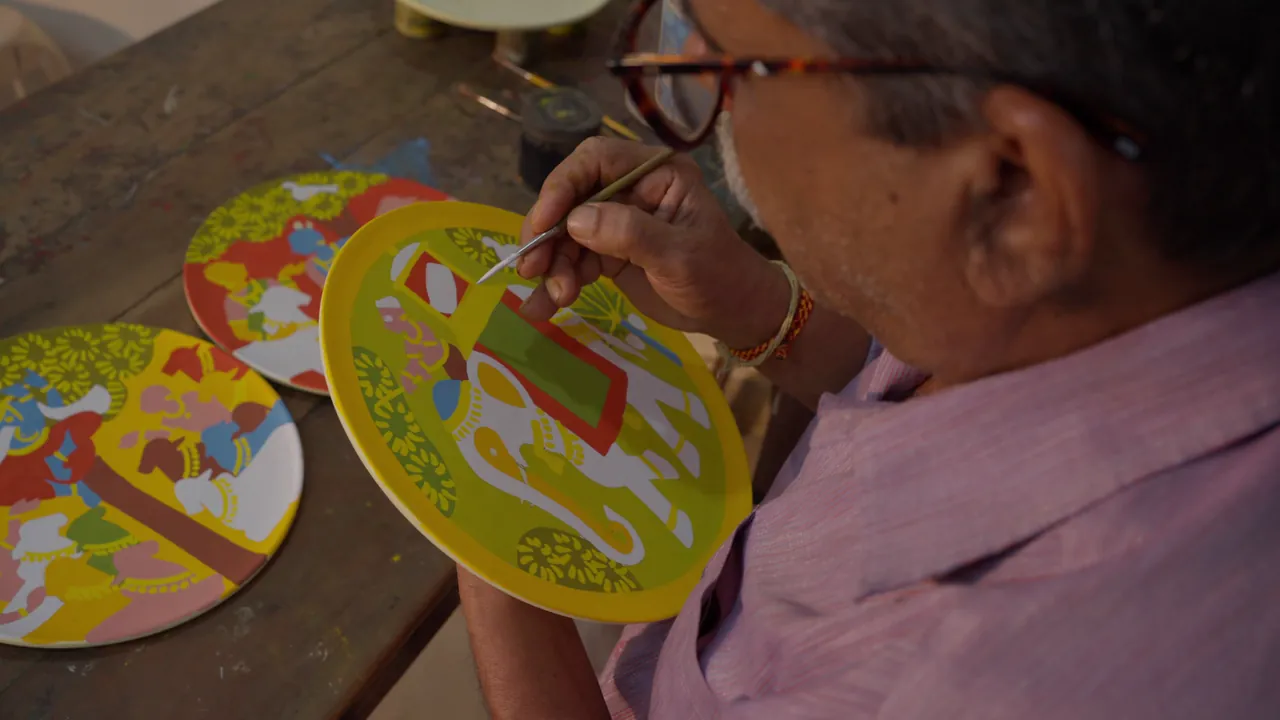
Meet the practitioners · Fieldwork
Our first fieldwork film, Nakash, follows a Cheriyal scroll painter and his family in Telangana.
Watch Nakash →Explore its themes: Śilpa · Craft · Kalā · Performance
Be part of it
Be part of Bharatiyata as it takes shape. Receive new essays, future field notes and updates on the work we're building with communities.